


Guide
Electrolux Dishwasher Leak Repair Cost: What the Estimate Depends On
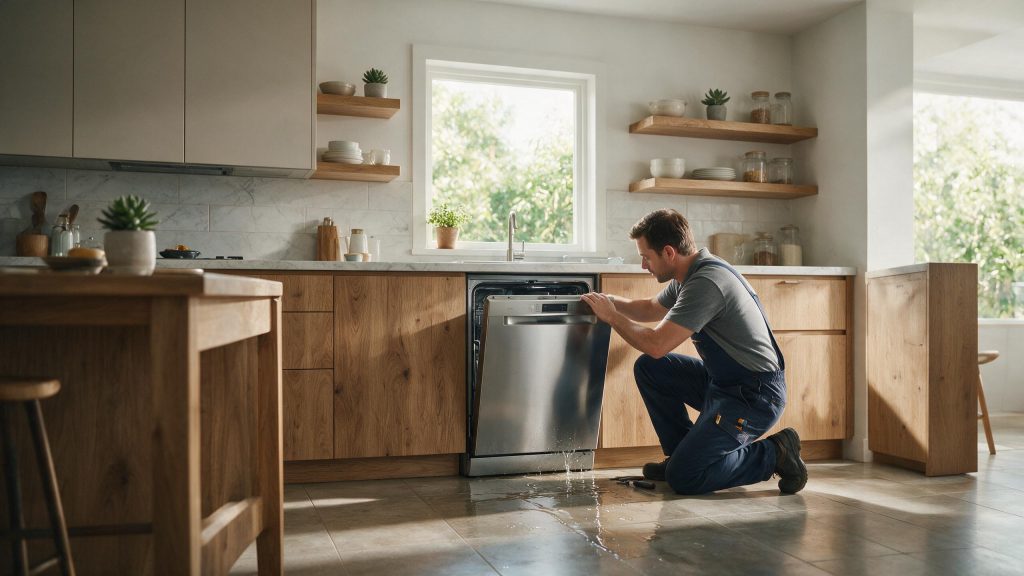
What a dishwasher leak repair costs depends on where the water escapes and what the diagnosis finds: a door that does not close, a supply connection, the drain connection, or a part inside the tub. Check the door, the visible hose connections and detergent habits first, and stop running cycles if water keeps reaching the floor.
Electrolux Dishwasher Leaking Water
Water on the floor around a dishwasher should be handled quickly. Start by identifying whether the leak appears at the door, supply hose, drain connection, or underneath the machine, then stop running cycles if water continues escaping.
Start with the checks you can perform from outside the appliance. If the symptom is tied to water, heat, gas, electricity, or moving parts, stop when the condition becomes unsafe rather than repeatedly testing the appliance. The exact diagnostic path can vary by model, so keep the full model number available.
| Symptom | What it can point to | What you can check |
|---|---|---|
| Water at the door edge | Door not latching fully, or suds and rinse-aid overflow | Close the door firmly, wipe any spilled rinse aid, confirm the detergent type and amount |
| Water near the supply connection | Loose connection at the water inlet valve or a damaged hose | Look at the visible connection for moisture without moving the machine |
| Water along the drain route | Kinked, loose or blocked drain hose | Check the hose route and whether the tub drains |
| Leak message on the display | Water detected in the bottom pan | Check for loose connections and level; see the manual for the code |
Check the Door and Kick Plate
One of the first possibilities is door not closing completely. Make sure the door closes completely and nothing interferes with it. This is useful because it rules out a condition that can imitate a component problem without requiring disassembly.
Inspect the Water Supply Connection
Next, consider loose or leaking supply hose. Inspect the visible water supply hose and connection for moisture. Look for a clear change in behavior rather than making several adjustments at the same time.
What Moves a Dishwasher Leak Estimate
The estimate follows what is found. A door seal, a hose, an inlet valve connection and a pump are different part types, and the effort to reach each one differs.
Simple causes cost nothing to rule out. Too much detergent, spilled rinse aid and an unlevel machine can all leave water on the floor without any failed part.
Review Drain Installation
Another common branch is incorrect or blocked drain installation. Check that the drain hose is routed correctly and is not blocked. If the symptom began immediately after installation, cleaning, a power event, or moving the appliance, that timing is especially useful.
Clean the Filter and Spray System
Do not overlook clogged filter contributing to abnormal water movement. Clean the filter, glass trap, and spray arms. If that check is normal, the remaining causes move farther toward internal components or controls.
Leak Detection and What the Manual Says
The use-and-care manual for one Electrolux built-in dishwasher describes an E30 message as a leak or overflow detected in the bottom pan and tells owners to look for loose connections at the water inlet valve and to make sure the unit is level. Its troubleshooting table also lists using only fresh detergent made for automatic dishwashers and measuring it carefully, since spilled rinse aid can foam and overflow.
A leak message that returns after these checks points to a connection or component inside the cabinet that a technician needs to inspect.
Common Questions
Does an E30 message always mean a failed part?
The manual for one Electrolux model describes E30 as a leak or overflow detected in the bottom pan and suggests checking inlet valve connections and level. It can also follow foaming from detergent or rinse aid, so check those before assuming a part has failed.
Can hand dish soap cause a leak?
Hand soap creates far more suds than automatic dishwasher detergent, and suds can push water out around the door. Use only detergent made for automatic dishwashers, in the amount your manual gives.
Safe Troubleshooting Checklist
- Make sure the door closes completely and nothing interferes with it.
- Inspect the visible water supply hose and connection for moisture.
- Check that the drain hose is routed correctly and is not blocked.
- Clean the filter, glass trap, and spray arms.
- Use only automatic dishwasher detergent in the recommended amount and wipe up rinse-aid spills.
- Door not closing completely.
- Loose or leaking supply hose.
- Incorrect or blocked drain installation.
- Clogged filter contributing to abnormal water movement.
- Too much detergent, hand dish soap, or spilled rinse aid.
- Internal pump, tub, hose, valve, or seal leak.
- Electrolux Dishwasher Repair
- Electrolux Dishwasher Error Codes
- Electrolux Dishwasher Not Draining: Check the Filter, Hose, and Installation
- Electrolux Dishwasher Not Cleaning Dishes: Improve Wash Performance Safely
- Electrolux Dishwasher Not Draining: A Step-by-Step Drain-Path Check
- Electrolux Dishwasher Cleaning Performance: Filter, Loading, and Spray Care
- Electrolux Dishwasher Drying Performance: Rinse Aid, Loading, and Cycle Care
Common Causes to Keep in Mind
Rule Out Oversudsing
Turn off the dishwasher and close the water supply if the leak continues. Do not keep running test cycles while water is reaching the floor or cabinetry. If the leak does not come from an obvious external connection or oversudsing condition, book dishwasher repair. Internal pumps, hoses, valves, tub seals, and door sealing should be inspected. Clear notes about what changed, when the symptom appears, and what you already checked can make the service visit more efficient.
What Changes the Repair Estimate
For this dishwasher symptom, price cannot be determined accurately from the symptom alone. The estimate changes with the exact Electrolux model, the system testing identifies, part availability, access requirements, and whether the problem is external to the appliance or inside it.
A useful quote should separate diagnosis, parts, and labor clearly enough that you can understand what is being repaired. Ask whether the problem is isolated, whether a model-specific part must be ordered, and whether a return visit is expected.
Repair-versus-replacement decisions should compare the confirmed repair with the installed cost of replacement, not only the retail price of a new appliance. Built-in fit, delivery, haul-away, plumbing, electrical work, venting, stacking, cabinetry, or laundry-tower installation can materially change that comparison.
What to Tell the Technician
Provide the full model number, when the symptom started, whether it happens every cycle or only under certain conditions, and any display message or error code you have seen. Mention recent installation work, power outages, plumbing changes, filter changes, or unusual noises. Those details help separate a setup issue from a component or control problem.
FAQ
Can too much detergent make a dishwasher leak?
Yes. Electrolux notes that oversudsing can lead to leaking.
Can a clogged filter contribute to leaking?
It can interfere with normal water movement and should be cleaned as part of the first checks.
Should I keep testing the dishwasher to find the leak?
No. Once active leaking is confirmed, limit water exposure and have the source diagnosed.
Related Electrolux Repair Resources
Similar Articles
Keep reading
Similar articles
Electrolux Induction Cooktop Repair Cost: Cookware, Power, or Electronics?
What an Electrolux induction cooktop repair costs depends first on what the diagnosis finds. A pan the cooktop cannot detect, a lock setting or…
Electrolux Oven Not Heating Enough: What Changes the Repair Cost?
The repair cost for an Electrolux oven that does not heat enough depends on what is behind the symptom. A setting, a worn door…
Electrolux Dryer Not Heating: What Changes the Repair Cost?
What an Electrolux dryer repair costs when the drum turns but there is no heat depends on which side of the dryer has failed.…
Book a repair
Tell us what’s wrong — we’ll take it from there
Share a few details and we’ll confirm an appointment. Prefer to talk? Call us and we’ll help right away.
Address
We operate in California, Florida, New York, and Texas.
Phone
(844) 917-2115
Hours
Mon–Fri 8:00 AM – 6:00 PM · Sat 9:00 AM – 2:00 PM
Service area
We currently serve the Miami, New York, Houston, Los Angeles and San Diego metro areas, including many surrounding communities.
Response time
Same-day and next-day appointments are often available — confirm with your ZIP code.
Directions
View on map
Request your repair
Fields marked with * are required.