

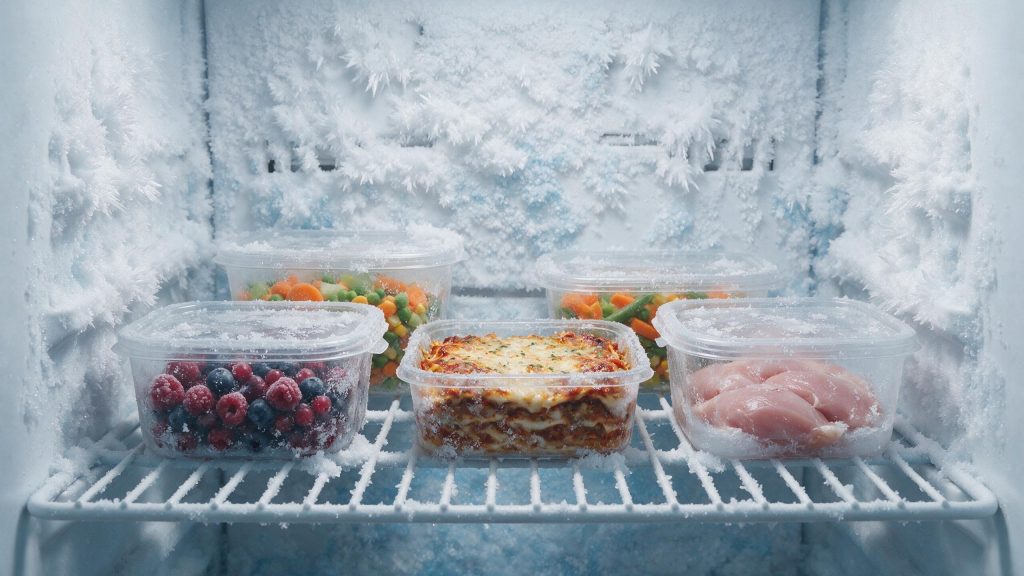

Repeat frost buildup usually traces back to warm, humid air getting into the cabinet: a door that does not close fully, a worn or dirty gasket, packages holding a door open, or blocked airflow. Fix those first and let the refrigerator recover with the doors closed. If heavy frost returns anyway, a defrost component may be involved and needs a diagnosis.
Electrolux Refrigerator Frost Buildup
A light amount of moisture can be normal, but heavy frost on food, shelves, vents, or an interior panel points to a condition worth investigating. The pattern and location of the frost can help distinguish door sealing from airflow or defrost problems.
Start with the checks you can perform from outside the appliance. If the symptom is tied to water, heat, gas, electricity, or moving parts, stop when the condition becomes unsafe rather than repeatedly testing the appliance. The exact diagnostic path can vary by model, so keep the full model number available.
| Symptom | What it can point to | What you can check |
|---|---|---|
| Frost along the door edge | Gasket gap or a package holding the door open | Clean the gasket; check that the door closes on all sides |
| Frost on food in open containers | Moisture escaping from uncovered food | Cover containers and wrappers |
| Frost around vents or the rear panel | Blocked airflow | Move food away from vents and panels |
| Heavy frost that returns after the checks | Defrost sensor, heater, fan or drain issue | Keep the doors shut and book a diagnosis |
Check Door Closing and Gaskets
One of the first possibilities is door left open or not closing fully. Remove anything that prevents the door from closing completely. This is useful because it rules out a condition that can imitate a component problem without requiring disassembly.
Look for Packages Blocking the Door
Next, consider dirty, folded, or damaged gasket. Clean the door gasket and inspect it for obvious gaps or deformation. Look for a clear change in behavior rather than making several adjustments at the same time.
Where the Moisture Comes From
The use-and-care manual for one Electrolux French-door refrigerator says frost and moisture inside increase with hot, humid weather, a door that is slightly open, doors opened too often, and open containers, and it advises keeping containers covered. It also says moisture on the outside of the cabinet or between the doors in humid weather is normal and goes away when humidity drops.
Keep Interior Air Vents Clear
Another common branch is food package interfering with the door. Move food away from air vents and interior rear panels. If the symptom began immediately after installation, cleaning, a power event, or moving the appliance, that timing is especially useful.
Consider Recent Door-Open Events
Do not overlook blocked airflow inside the cabinet. Keep the doors closed while the unit returns to normal temperature. If that check is normal, the remaining causes move farther toward internal components or controls.
Seals, Level and the Defrost Cycle
The manual for another model says the refrigerator should be level and slightly higher in the front so the doors close, and that the door seals must meet the cabinet on all sides. A gasket that is dirty, worn, cracked or poorly fitted is listed among the reasons a refrigerator runs too much or runs warm, and warm room air entering through a gap is a source of frost.
Frost is also related to normal automatic defrost, which the same manual describes as lasting about 30 minutes, with water dripping into the drain pan. A one-time light film is different from heavy frost that keeps coming back after the door and airflow checks.
Common Questions
Why does frost keep coming back after I remove it?
The source of the moisture is still present. Door gaps, open containers, frequent door openings and blocked airflow are the usual sources to check before a defrost problem is considered.
Is moisture on the outside of the refrigerator a problem?
The manual for one Electrolux model describes outside moisture in humid weather as normal, and says it disappears when humidity falls. Moisture inside the cabinet is worth investigating.
Can I speed up defrosting?
Keep the doors closed and avoid sharp tools on heavy ice. If frost keeps returning, a diagnosis is safer than forcing it off.
Safe Troubleshooting Checklist
- Remove anything that prevents the door from closing completely.
- Clean the door gasket and inspect it for obvious gaps or deformation.
- Move food away from air vents and interior rear panels.
- Keep the doors closed while the unit returns to normal temperature.
- Do not chip heavy ice with knives or sharp tools.
- Door left open or not closing fully.
- Dirty, folded, or damaged gasket.
- Food package interfering with the door.
- Blocked airflow inside the cabinet.
- Defrost sensor, heater, fan, drain, or control issue.
- Electrolux Refrigerator Repair
- Electrolux Refrigerator Error Codes
- Electrolux Refrigerator Not Cooling: What to Check Before You Book Repair
- Electrolux Ice Maker Not Making Enough Ice: Common Causes and Safe Checks
- Electrolux Refrigerator Not Cooling: What to Check Before You Book Repair
- Electrolux Ice Maker Care: Preventing Slow or Low Ice Production
- Electrolux Refrigerator Water Dispenser Not Working: What You Can Check
Common Causes to Keep in Mind
Maintenance That Helps Prevent a Repeat
For this refrigerator issue, maintenance is useful when it preserves clean airflow or water flow, correct sealing and loading, clean user-accessible filters or surfaces, and stable operating conditions.
Use the exact Electrolux model instructions for removable filters, detergent, rinse aid, seals, spray components, water filters, lint systems, and cleaning methods. If the symptom returns after correct care, move to diagnosis rather than more aggressive cleaning or repeated resets.
Keep a short maintenance record: what was cleaned or adjusted, whether performance improved, and how quickly the issue returned.
When Frost Points to a Defrost Problem
Stop if frost is accompanied by rising food temperatures, water leaking onto the floor, or a fan striking heavy ice. If heavy frost returns after the door and airflow issues are corrected, schedule refrigerator repair. A technician can inspect the defrost system, fan area, sensors, drain path, and controls. The goal is not to guess at parts; it is to rule out the safe, visible causes and preserve the symptoms that matter for diagnosis.
What to Tell the Technician
Provide the full model number, when the symptom started, whether it happens every cycle or only under certain conditions, and any display message or error code you have seen. Mention recent installation work, power outages, plumbing changes, filter changes, or unusual noises. Those details help separate a setup issue from a component or control problem.
FAQ
Can a door seal cause frost?
Yes. Warm humid air entering around the door can freeze on cold surfaces.
Can blocked vents contribute to frost?
Poor circulation can create uneven temperatures and localized freezing conditions.
Is it safe to chip frost away?
Avoid sharp tools because they can damage liners, tubing, and evaporator components.
Related Electrolux Repair Resources
Similar Articles
Keep reading
Similar articles
Electrolux Washer Suds Prevention: Detergent Amount, Water, and Cycle Care
Too many suds in an Electrolux front-load washer usually trace back to detergent: the wrong type, too much, or a heavy build-up of old…
Electrolux Dishwasher Odor Prevention: Filter, Drain, and Cleaning Routine
A dishwasher odor usually traces back to trapped food, residue in the filters or the tub, or water that does not drain fully, so…
Electrolux Dishwasher Drying Performance: Rinse Aid, Loading, and Cycle Care
Dishes that come out wet usually trace back to the cycle and the supplies rather than the heater: a drying option that was not…
Book a repair
Tell us what’s wrong — we’ll take it from there
Share a few details and we’ll confirm an appointment. Prefer to talk? Call us and we’ll help right away.
Address
We operate in California, Florida, New York, and Texas.
Phone
(844) 917-2115
Hours
Mon–Fri 8:00 AM – 6:00 PM · Sat 9:00 AM – 2:00 PM
Service area
We currently serve the Miami, New York, Houston, Los Angeles and San Diego metro areas, including many surrounding communities.
Response time
Same-day and next-day appointments are often available — confirm with your ZIP code.
Directions
View on map
Request your repair
Fields marked with * are required.