


Guide
Electrolux Washer Suds Prevention: Detergent Amount, Water, and Cycle Care
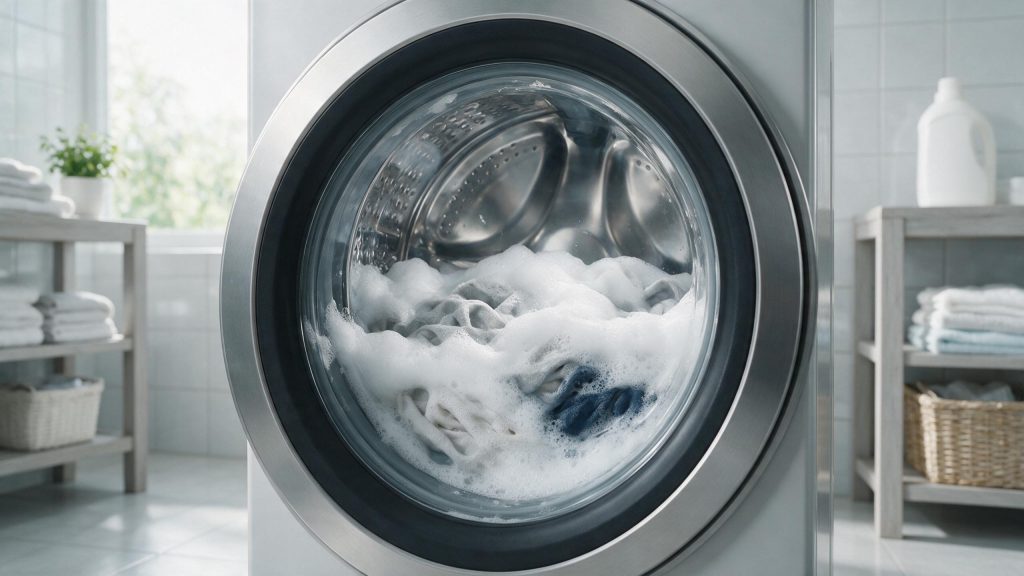
Too many suds in an Electrolux front-load washer usually trace back to detergent: the wrong type, too much, or a heavy build-up of old residue. The washer adds extra rinses by itself when it senses foam, so the first move is to let the cycle finish. If suds keep returning with the right detergent and the correct dose, the drain or sensing system is worth a diagnosis.
Electrolux Washer Has Too Many Suds
A front-load washer uses less water than a traditional deep-fill design, so too much detergent can create foam that takes extra rinsing to remove. Electrolux uses oversuds protection on applicable models to manage this condition.
Start with the checks you can perform from outside the appliance. If the symptom is tied to water, heat, gas, electricity, or moving parts, stop when the condition becomes unsafe rather than repeatedly testing the appliance. The exact diagnostic path can vary by model, so keep the full model number available.
| Symptom | What it can point to | What you can check |
|---|---|---|
| Display shows SU then dS and the cycle runs long | Oversuds protection adding rinses | Let the cycle finish without interrupting it |
| Suds return load after load | Non-HE detergent or too much detergent | Switch to HE detergent and reduce the dose |
| Residue and stains in the compartments | Detergent or softener compartments overfilled | Fill only to the marked lines and clean the drawer |
| Detergent pack left undissolved | Too many packs, or PODS option not selected | Use no more than two packs and select PODS if offered |
| Suds and standing water together | Drain or sensing issue | Check the drain hose, then book diagnosis |
Why Too Many Suds Change the Cycle
One of the first possibilities is too much HE detergent. Use only detergent labeled for high-efficiency washers. This is useful because it rules out a condition that can imitate a component problem without requiring disassembly.
Use HE Detergent in the Right Amount
Next, consider non-HE detergent. Measure detergent for the actual load size, soil level, and concentration. Look for a clear change in behavior rather than making several adjustments at the same time.
What the Washer Does When It Detects Suds
The use-and-care manual for Electrolux front-load washers describes oversuds protection. When the washer detects too many suds, it adds extra rinses until the suds clear, and each extra rinse adds about 5 minutes. The display shows SU, then dS.
A long cycle with those messages is therefore the washer working as designed. Interrupting it leaves the foam in the drum. The manual’s fix is to run a rinse cycle and use less detergent next time, and it lists non-HE detergent and too much detergent as the causes.
Account for Concentrated Detergent
Another common branch is highly concentrated detergent measured like standard detergent. Do not add extra detergent just because a load is heavily soiled. If the symptom began immediately after installation, cleaning, a power event, or moving the appliance, that timing is especially useful.
Packs, Compartments and Residue
Detergent packs have their own rules in the manual: no more than two in the pack compartment, with the PODS option selected on models that have it, or the pack may not dissolve. Overfilling the detergent and softener compartments is listed as a cause of residue and stains.
Residue builds in the dispenser drawer too. The manual says to clean it once or twice a month, and it also reminds you to run the clean washer cycle every 50 cycles using an indicator light.
Let the Washer Clear Existing Foam
Do not overlook detergent residue in the system. Let the washer complete the extra rinsing needed to clear foam. If that check is normal, the remaining causes move farther toward internal components or controls.
Common Questions
What do SU and dS mean on the display?
On the washer in the manual, SU then dS appears while oversuds protection is adding extra rinses. It is not a fault message, and the cycle clears the foam on its own.
Is more detergent the answer for a heavily soiled load?
Extra detergent is the more likely way to cause suds. Measure for the load and use only detergent labeled for high-efficiency washers.
Safe Troubleshooting Checklist
- Use only detergent labeled for high-efficiency washers.
- Measure detergent for the actual load size, soil level, and concentration.
- Do not add extra detergent just because a load is heavily soiled.
- Let the washer complete the extra rinsing needed to clear foam.
- If residue is suspected, follow the model’s washer-cleaning procedure.
- Too much he detergent.
- Non-he detergent.
- Highly concentrated detergent measured like standard detergent.
- Detergent residue in the system.
- Less commonly, draining or sensing issues.
- Electrolux Washer Repair
- Electrolux Washer Error Codes
- Electrolux Washer Not Starting: What to Check Before Repair
- Electrolux Front Load Washer Leaking Water: Safe Checks by Leak Location
- Electrolux Washer Not Starting: What to Check Before Repair
- Electrolux Washer Leak Repair Cost: Hose, Door, Drain, or Internal?
- Electrolux Washer Draining Slowly: A Step-by-Step Drain Check
Common Causes to Keep in Mind
Maintenance That Helps Prevent a Repeat
For this washer issue, maintenance is useful when it preserves clean airflow or water flow, correct sealing and loading, clean user-accessible filters or surfaces, and stable operating conditions.
Use the exact Electrolux model instructions for removable filters, detergent, rinse aid, seals, spray components, water filters, lint systems, and cleaning methods. If the symptom returns after correct care, move to diagnosis rather than more aggressive cleaning or repeated resets.
Keep a short maintenance record: what was cleaned or adjusted, whether performance improved, and how quickly the issue returned.
When Oversudsing Keeps Coming Back
Stop and inspect further if suds are leaking from the machine, the washer cannot drain, or the same oversudsing behavior returns with a very small correct detergent dose. If oversudsing continues with the correct HE detergent amount, book washer repair. A drain, pressure-sensing, or control issue may be affecting how the washer detects and clears foam. The goal is not to guess at parts; it is to rule out the safe, visible causes and preserve the symptoms that matter for diagnosis.
What to Tell the Technician
Provide the full model number, when the symptom started, whether it happens every cycle or only under certain conditions, and any display message or error code you have seen. Mention recent installation work, power outages, plumbing changes, filter changes, or unusual noises. Those details help separate a setup issue from a component or control problem.
FAQ
What does SU dS mean on an Electrolux washer?
Electrolux uses SU dS to indicate oversudsing on applicable front-load washers.
Will the washer add more rinses?
Yes. Electrolux notes that oversuds protection can add rinsing until excess suds are cleared.
Should I use more detergent for a larger washer?
Not automatically. Follow the detergent concentration and load guidance rather than filling to the maximum by habit.
Related Electrolux Repair Resources
Similar Articles
Keep reading
Similar articles
Electrolux Dishwasher Odor Prevention: Filter, Drain, and Cleaning Routine
A dishwasher odor usually traces back to trapped food, residue in the filters or the tub, or water that does not drain fully, so…
Electrolux Dishwasher Drying Performance: Rinse Aid, Loading, and Cycle Care
Dishes that come out wet usually trace back to the cycle and the supplies rather than the heater: a drying option that was not…
Electrolux Dishwasher Cleaning Performance: Filter, Loading, and Spray Care
Cloudy glasses and food left on plates usually trace back to the filters, spray arms, detergent and loading rather than a failed pump. Clean…
Book a repair
Tell us what’s wrong — we’ll take it from there
Share a few details and we’ll confirm an appointment. Prefer to talk? Call us and we’ll help right away.
Address
We operate in California, Florida, New York, and Texas.
Phone
(844) 917-2115
Hours
Mon–Fri 8:00 AM – 6:00 PM · Sat 9:00 AM – 2:00 PM
Service area
We currently serve the Miami, New York, Houston, Los Angeles and San Diego metro areas, including many surrounding communities.
Response time
Same-day and next-day appointments are often available — confirm with your ZIP code.
Directions
View on map
Request your repair
Fields marked with * are required.